

Background
Offboarding runs on the same standardized deprovisioning workflows used across Lumos. You configure deprovisioning workflows on each app’s Account Workflows tab and use them in Offboarding. Newly connected apps get a default offboarding workflow automatically, and apps with an empty workflow are excluded from offboarding. If you set up offboarding on the Integrations tab in the past, Lumos moved your workflows over automatically. See Offboarding settings moved from the Integrations tab at the end of this article. References Standardized Account Workflows Configuring ITSM Rules in LumosWhat you can do
- Build one deprovisioning workflow and reuse it everywhere. The same workflow can power Offboarding, AppStore removals, Movers, and Access Reviews, so access is removed the same way no matter what triggers it.
- Run a different workflow for Offboarding than for AppStore. Keep a stricter workflow (for example, one that releases licenses and resources) just for offboarding.
- Skip setup for new apps. Newly connected apps get a default offboarding workflow automatically. Previously you had to configure one manually before the app was included in offboarding.
Configuring a Deprovisioning Workflow for Offboarding
Before you start: you need permission to manage workflows in Lumos. If you don’t see the Account Workflows tab or can’t edit workflows, ask your Lumos administrator for access.-
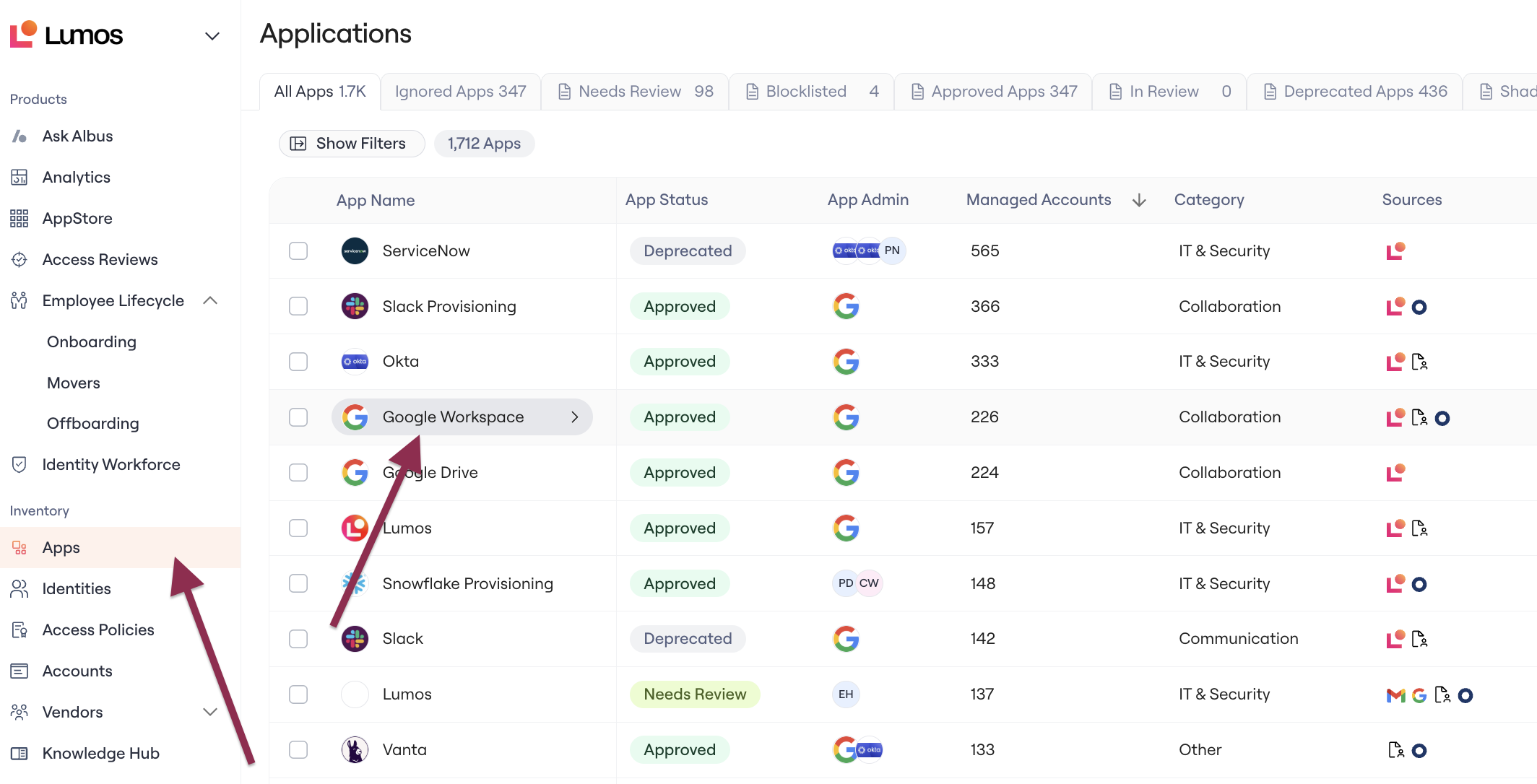
In the left nav, go to Apps > Select the app you want to configure to open its page.
-
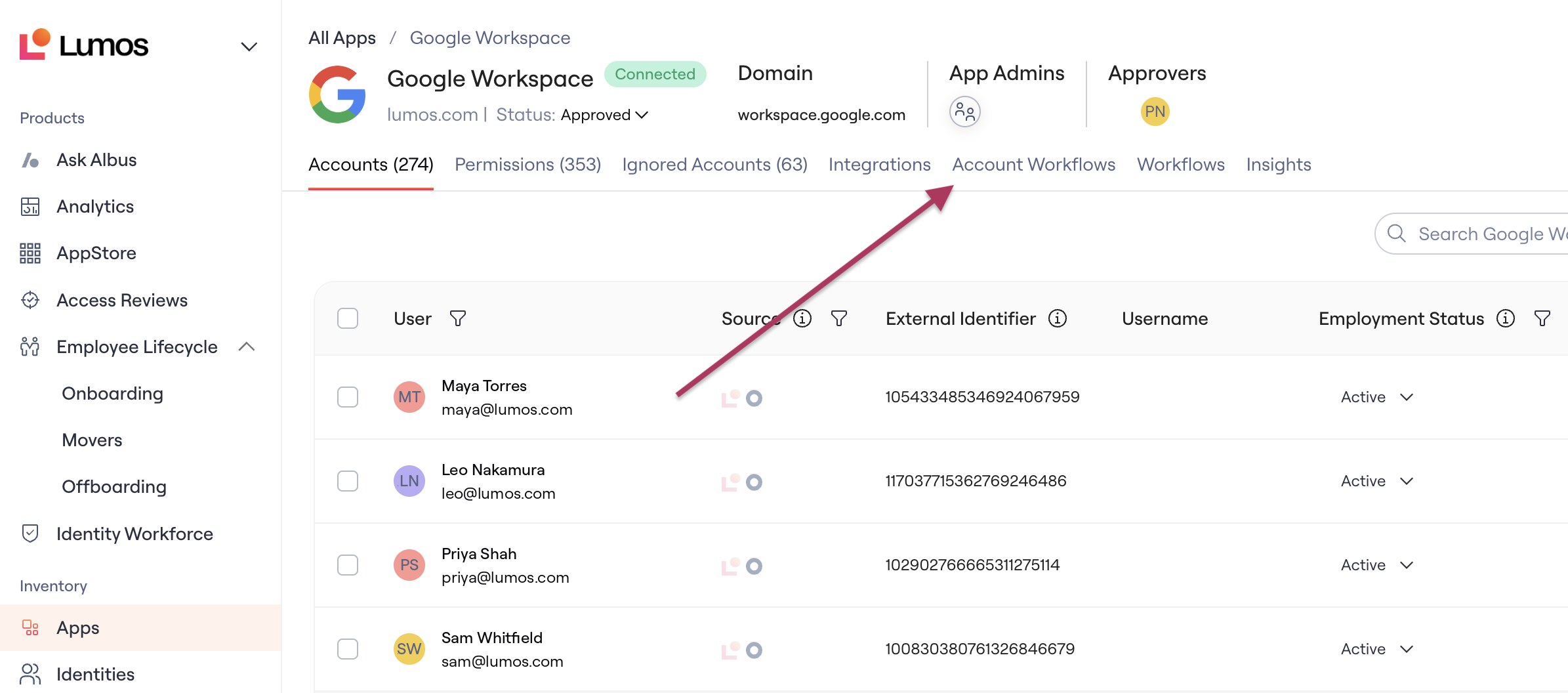
Navigate to the Account Workflows tab.
-
View existing workflows, or click Create Workflow to create a new one (details in Standardized Account Workflows).
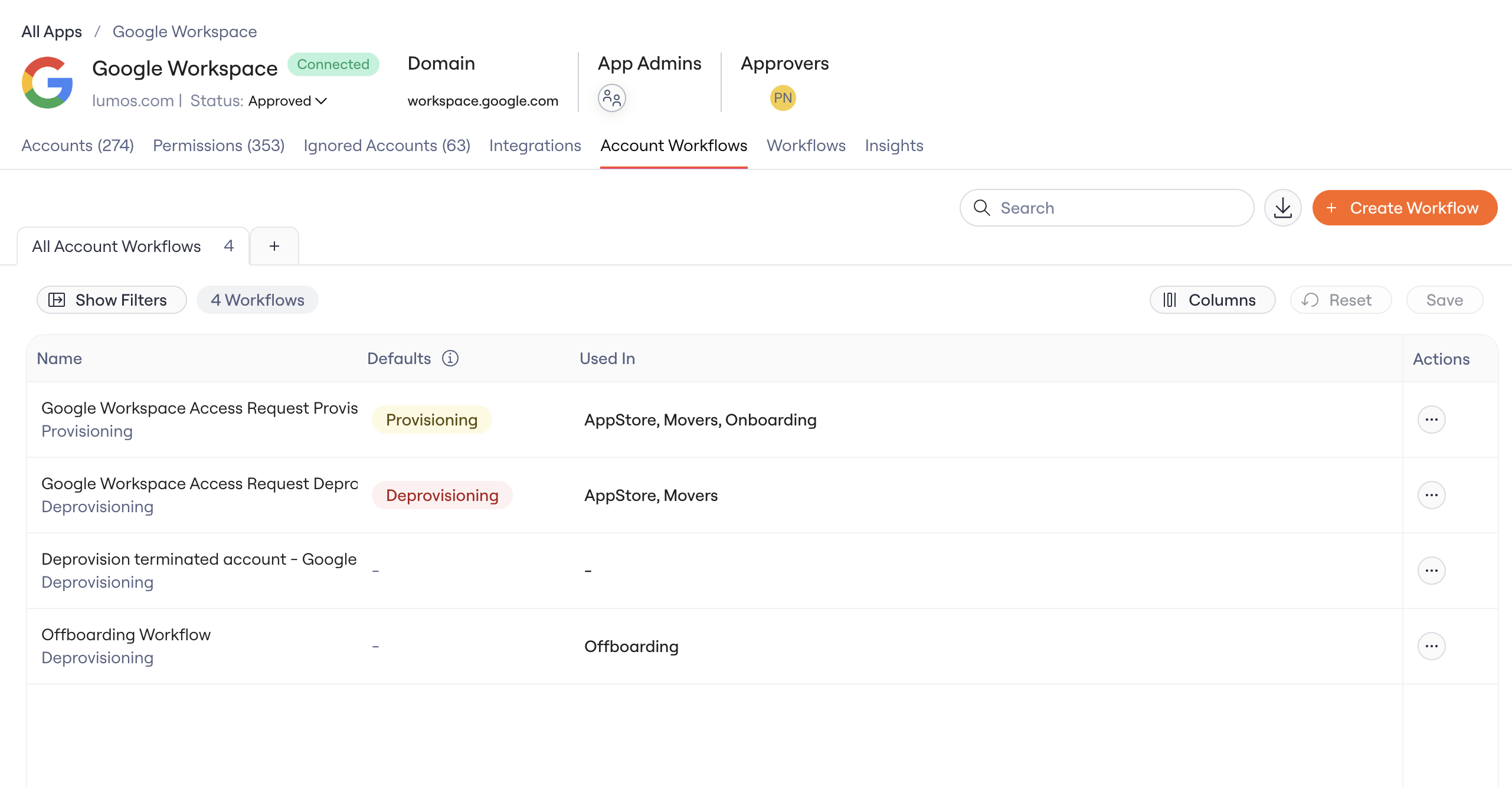
- Select the deprovisioning workflow you want to use for Offboarding. Every workflow is assigned as either Provisioning or Deprovisioning. Offboarding removes access, so only deprovisioning workflows are available for it.
-
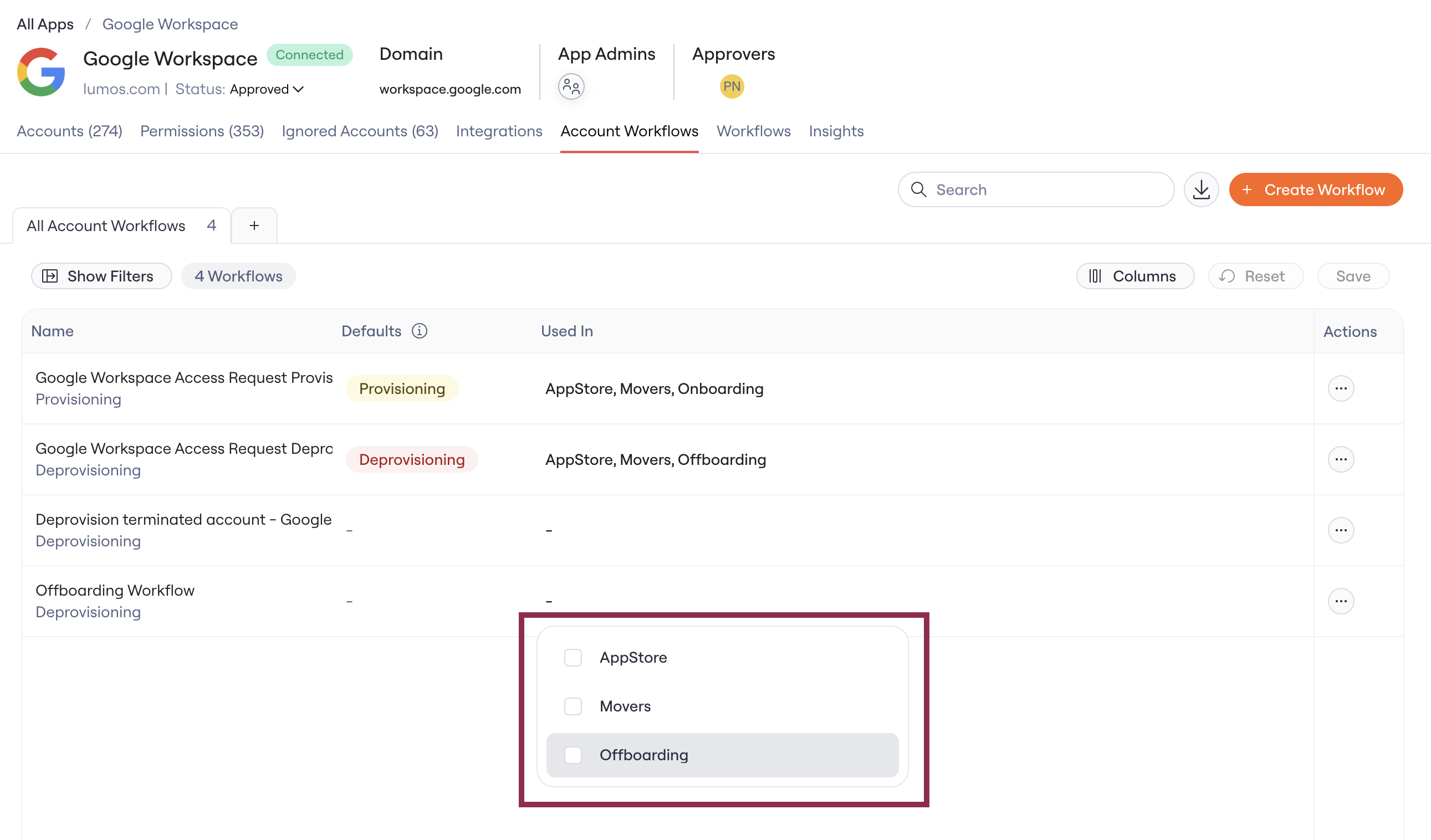
In the workflow’s Used in setting, check Offboarding.
Editing a workflow that other products use?
A workflow can be shared by more than one Lumos product. If you edit one that’s also used elsewhere (for example, by AppStore or Access Reviews), your changes apply everywhere it’s used. Lumos warns you before you save, shows you exactly which products would be affected, and offers to save your changes as a separate copy so the original stays as it is. When an offboarding removes individual entitlements (like groups or roles), Lumos uses the default deprovisioning workflow configured for that entitlement on the app’s Permissions tab.How offboardings run
Automatic offboardings use the deprovisioning workflow assigned to Offboarding for each app. Manual offboardings also default to the same workflows, but you can review and adjust each app before triggering the offboarding:-
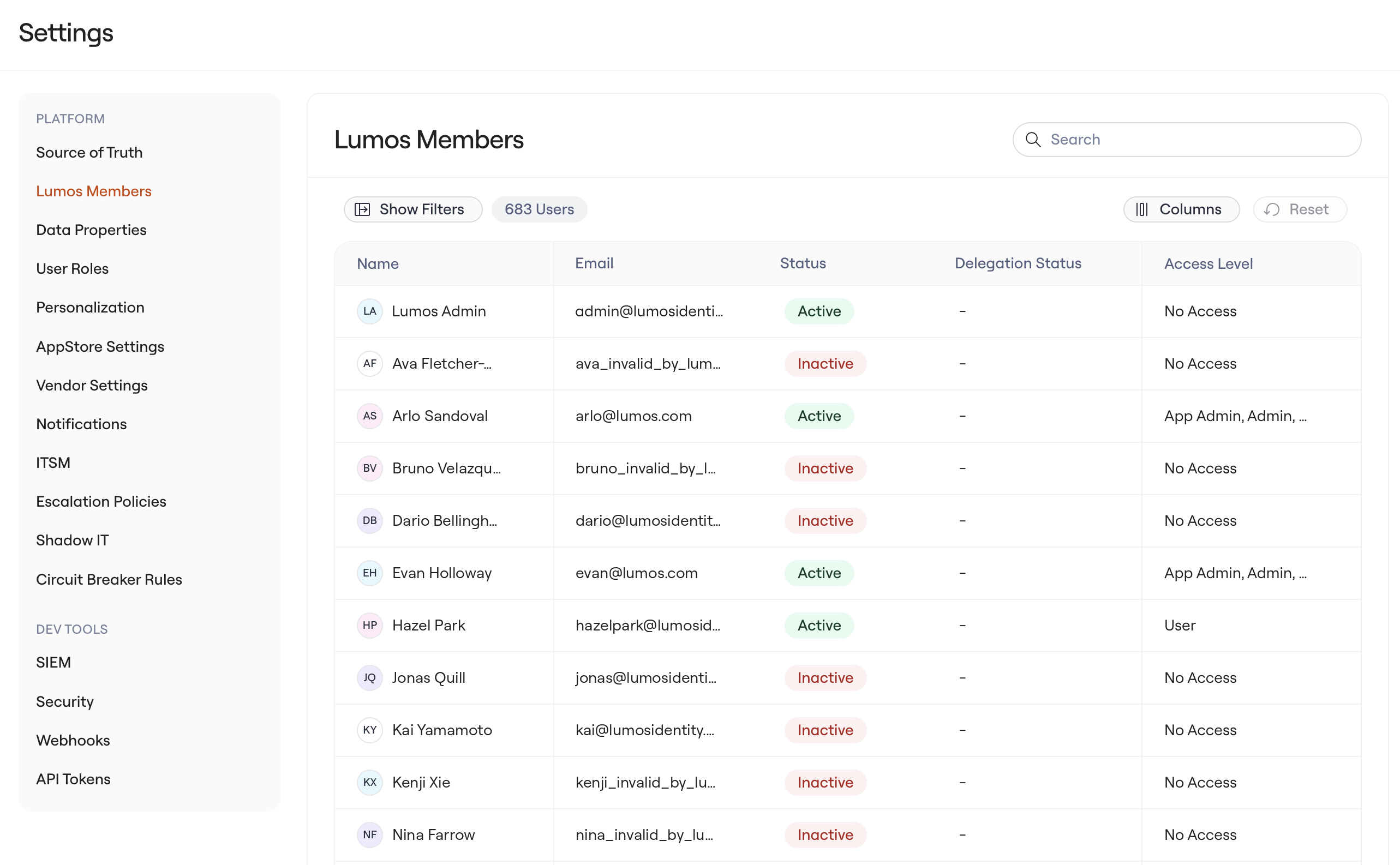
Go to Settings > Lumos Members and select the user.
-
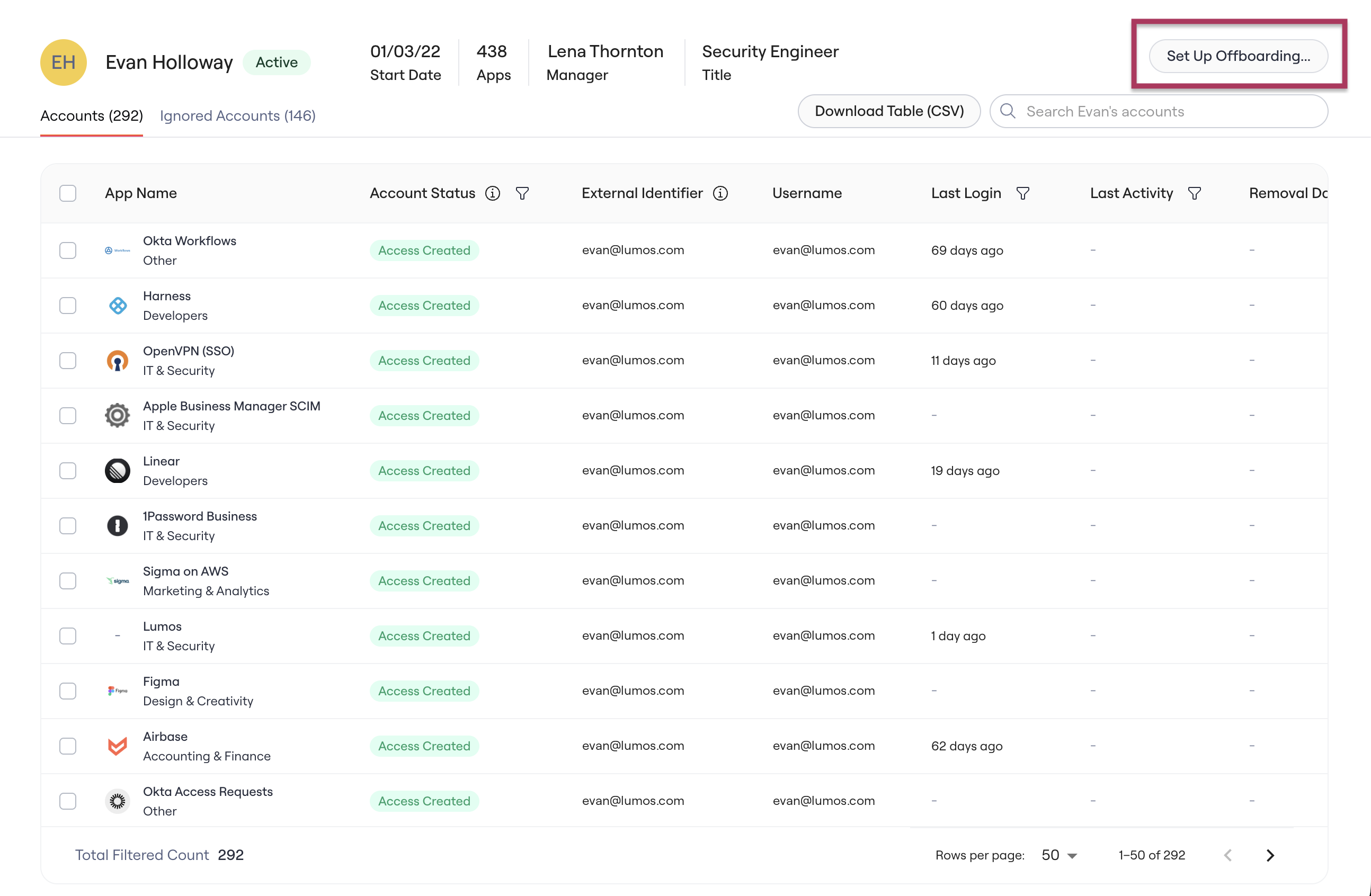
Click Set Up Offboarding.
- In the Offboard dialog, choose Now to run the offboarding immediately, or Schedule to run it on a future date.
- Lumos includes the apps selected in your Offboarding settings. Click Exclude on any you don’t want to deprovision. See Excluding Apps from Offboardings
-
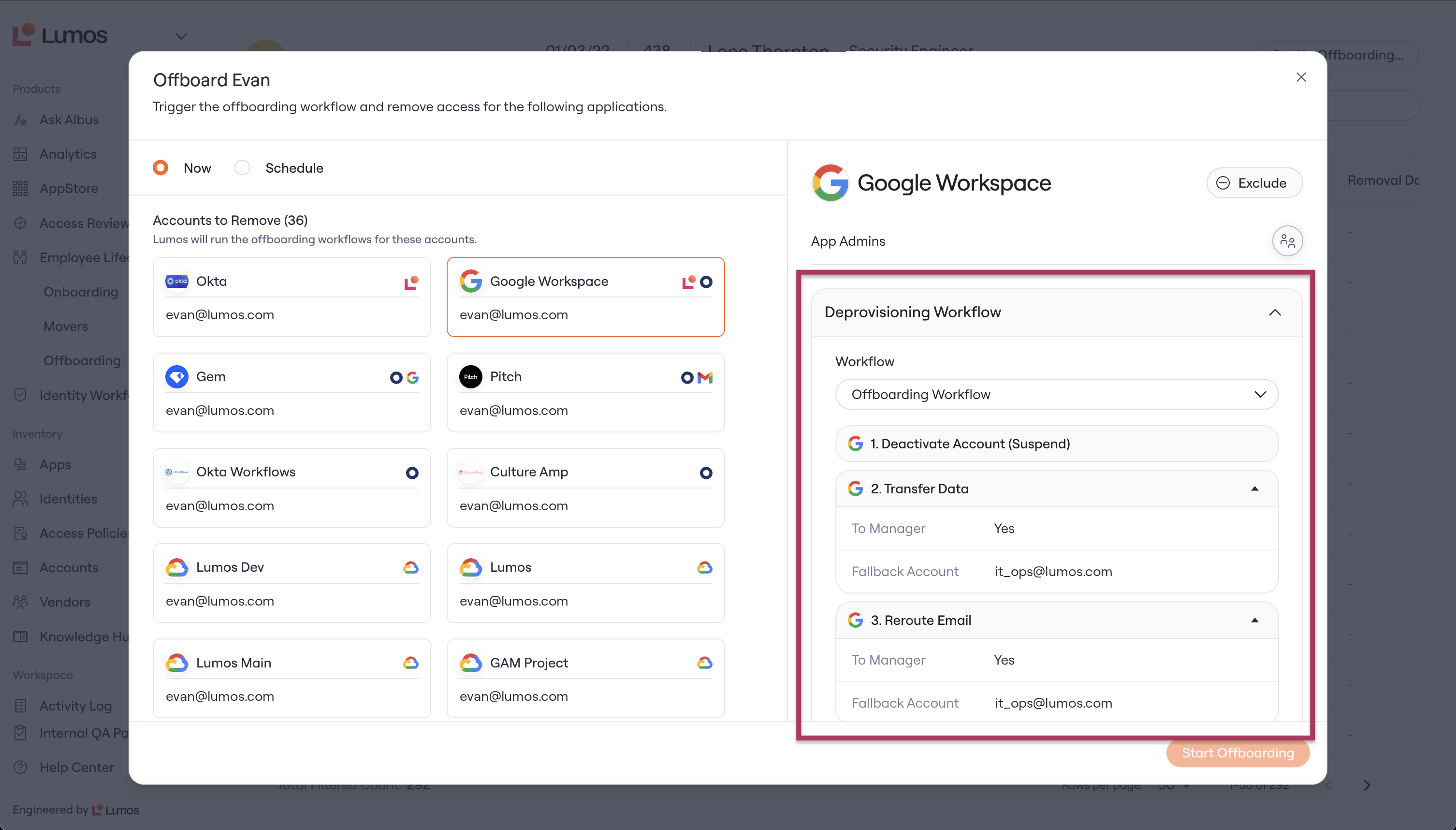
Select an app under Accounts to Remove to review it. The panel on the right shows the app’s Deprovisioning Workflow, with every step listed in order. The workflow defaults to the one assigned to Offboarding for that app. Expand a step to see its settings, for example where a Transfer Data step sends the user’s files.
-
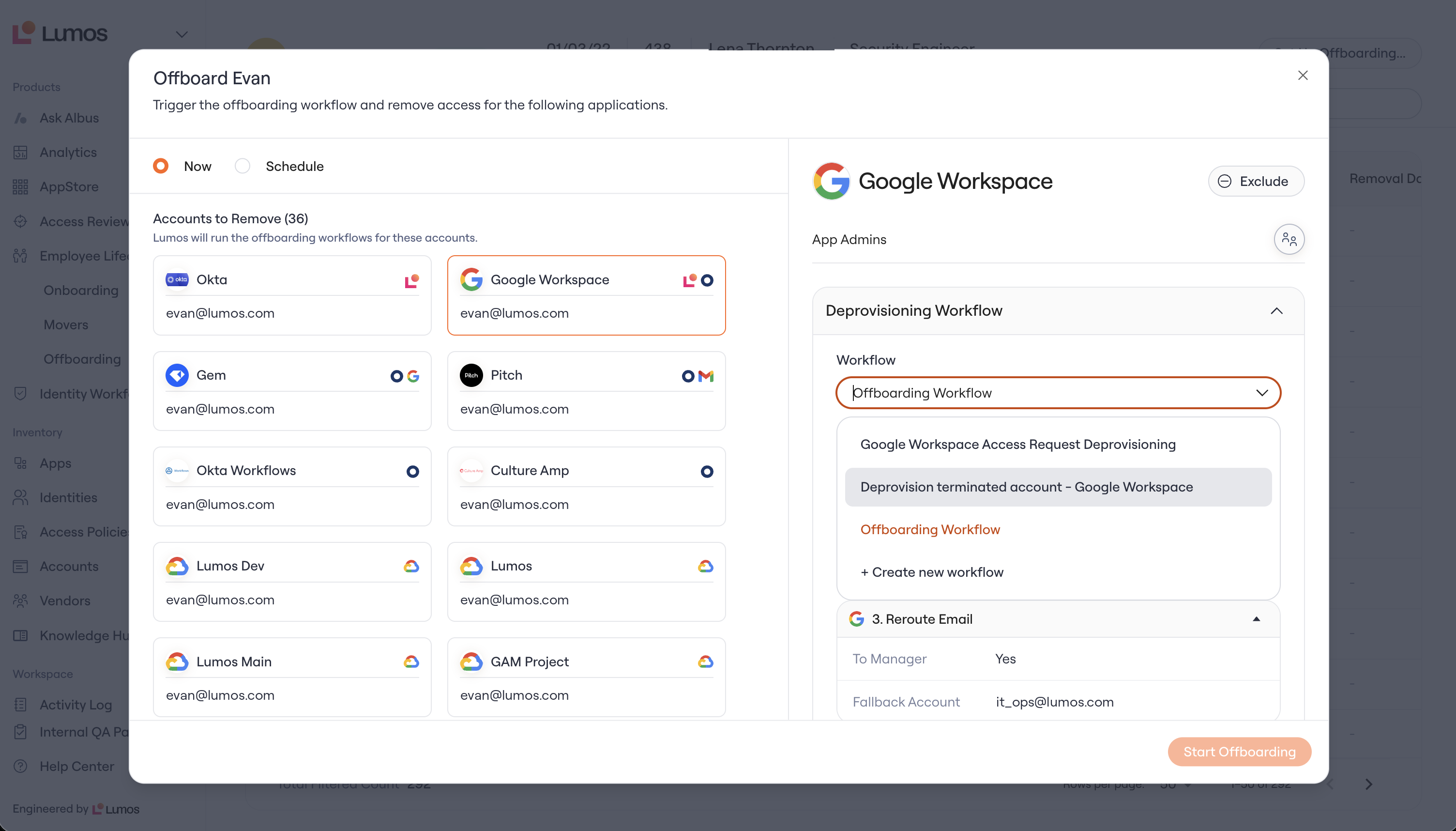
To handle an app differently in this offboarding only, pick another deprovisioning workflow from the Workflow dropdown, or create a custom one. This deprovisioning workflow choice applies to this offboarding only; the app’s saved workflow doesn’t change.
- To skip an app entirely for this offboarding, click Exclude in the app’s panel.
- Click Start Offboarding.
- View Offboarding Progress. See Viewing Offboarding Progress
Notifications
- The person being offboarded is not notified. Normally, Lumos messages a user as their access requests move along (created, approved, expiring, removed). Offboarding removals skip these messages, so the person leaving is not emailed about every app they’re losing access to. The same applies to access changes driven by Onboarding and Movers.
- Task assignees continue to receive digests. Task Summaries now cover deprovisioning manual tasks and error tasks. See How-To: Enable Task Summaries for Employee Lifecycle
ITSM tickets for offboarding
Offboarding removals generate ITSM tickets once you have ITSM v2 routing rules configured. Without routing rules, no tickets are created. See Configuring ITSM Rules in LumosApp Offboarding has moved from the Integrations tab
This section applies if you configured offboarding on an app’s Integrations tab before offboarding moved to Account Workflows. Your offboarding behavior is unchanged, but where you configure it has moved:- Lumos moved the App Offboarding workflows you configured on an app’s Integrations tab into the app’s Account Workflows table automatically, labeled for Offboarding. The Integrations tab no longer shows offboarding configuration.
- Apps that had no offboarding workflow configured received an empty offboarding workflow entry. An empty workflow means the app stays excluded from offboarding, exactly as before. Seeing these empty entries in the Account Workflows table is expected.